Local roots with lasting impact in Wujal Wujal
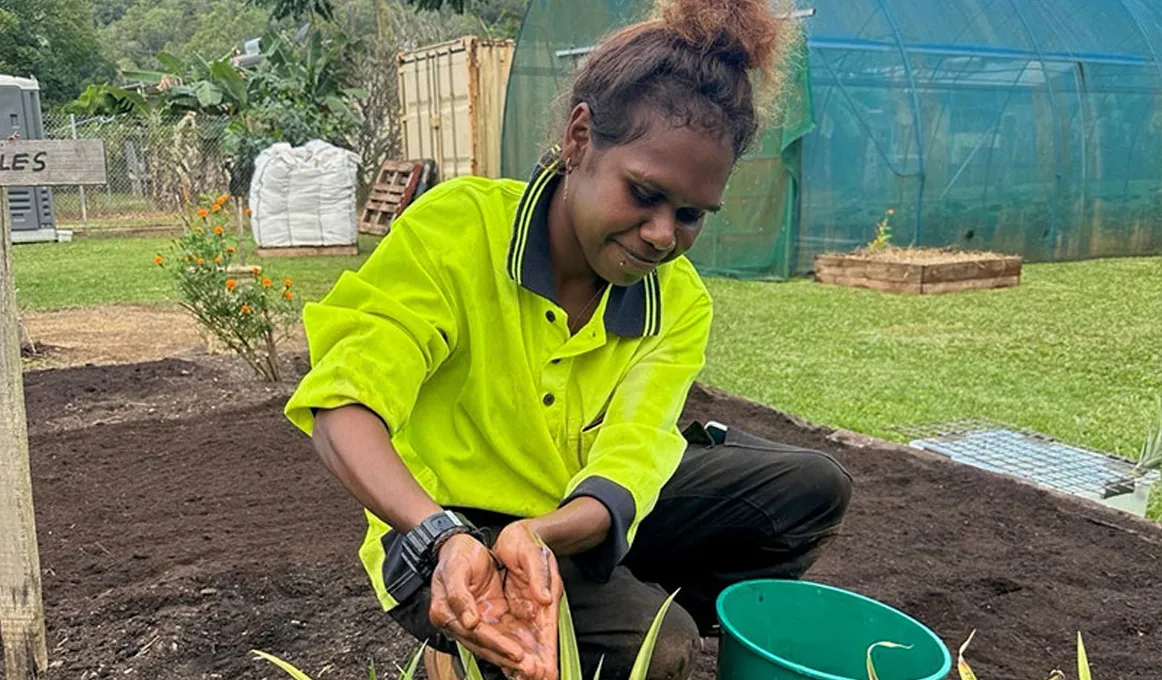
The Wujal Wujal Nursery is growing employment, food security and cultural knowledge while creating new economic opportunities for the community and future generations.
Photo: Wujal Wujal Community Nursery worker Cinique
New jobs at the Wujal Wujal Community Nursery are giving local people the opportunity to build skills, strengthen cultural knowledge, and contribute to projects that benefit their community.
The nursery began thanks to a partnership between Community Owned Enterprises (COE) and Wujal Wujal Aboriginal Shire Council (WWASC). Now, with the support of the Remote Jobs and Economic Development (RJED) program, they have been able to create seven new roles.
The new employees have hit the ground running, growing new crops and seedlings, and exploring opportunities for sustainability.
New nursey worker Cinique has embraced her role and is enjoying growing plants and produce to contribute to the community, while developing practical skills and valuable experience.
“I love gardening. I always go home at the end of the day with a smile on my face, telling my family what I’ve done. You grow things not just for yourself but for community and others, like bringing in bush medicines or bush foods for old folks” she says.
"I feel lucky to have this job and enjoy learning new things every day."
Raising awareness of native plants and celebrating traditional culture is a big part of the nursery.
“We are working to tag the plants in the nursery with their language names, so I’m getting to combine my people’s language with my work too,” Cinique says.
For fellow nursery workers, Chaysey and Lance, the role also provides an opportunity to share knowledge with the next generation, "It's great to come to work and learn something new every day, and also teach my kids about fruit and veggies,” Chaysey says.
Lance says he’s enjoying contributing to projects that benefit the community.
"I am enjoying learning how to grow plants and fruits, learning how the nursery operates and doing something that benefits the Wujal Wujal community."
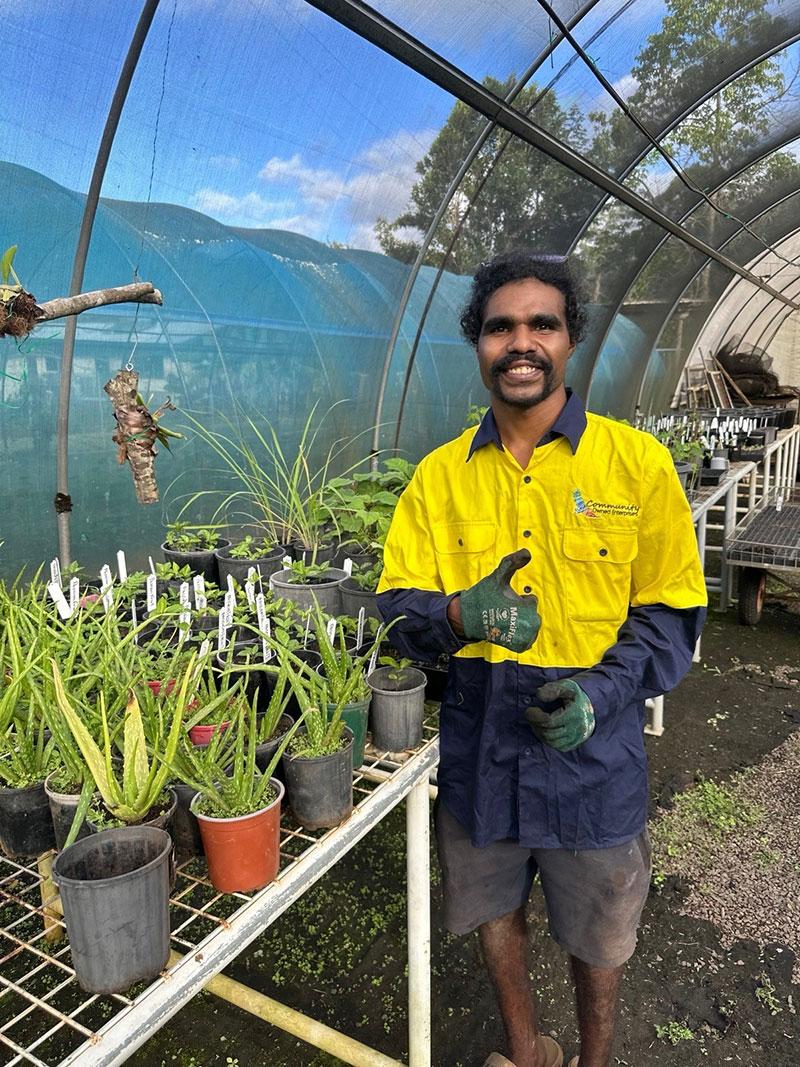
Photo: Wujal Wujal Community Nursery worker Lance
Wujal Wujal nursery grows a range of fresh produce such as chillies, capsicums, pineapples and taro. They have plans to make the produce available at local markets and to sell it at local stores. The team is also growing hundreds of native seedlings to support the rejuvenation along the Bloomfield River, where flooding caused by Cyclone Jasper in 2023 destroyed large areas that still remain bare. In the future, these native seedlings could also be supplied to surrounding communities.
These are just a few examples of how the nursery is striving to grow into a sustainable, community-owned enterprise, providing ongoing employment opportunities and community wealth.
COE Project Mentor and Wujal Wujal Aboriginal Shire Councillor Lucas Creek says,
“This project aims to grow a viable local enterprise right here in Wujal Wujal, for the people of Wujal Wujal. If we can grow produce that our community need and want, not only will selling it give us cheap, fresh fruit and veg, but it can also help with food security and costs of living.”
Growing native seedlings for local revegetation projects could create future economic opportunities while also drawing on community knowledge and expertise.
“Collecting native seeds and growing local trees and plants for our council, and eventually for others around the area is also a huge opportunity. It makes use of our cultural knowledge; what grows best where, where to find the strongest seeds for those plants and where they will fit best into revegetation projects, and there’s no shortage of them [the revegetation projects] in a cyclone prone region!”
To find out more information about the RJED program, visit: