Creating Jobs in Remote Communities
The Remote Jobs and Economic Development program is creating opportunities and building confidence for people living in remote communities.
First Nations man, Dallas Walker, knows how building your skills and confidence can open doors to new opportunities under the Remote Jobs and Economic Development (RJED) program. While living on the west coast of Australia near Geraldton, he enjoys the quiet lifestyle of the area, learning new things and using his hands.
“It’s good to keep busy... Just to be able to get up and do something more than anything and interact with the community,” he shared.
Dallas successfully developed his experience through his local employment service provider MEEDAC, gaining employment which has had a positive impact on him.
“MEEDAC had a program of making things here and I also got involved in Helping Hands. This place has given me opportunity, which is good. Helping people around the community and getting the opportunity to make things. It’s been good.”
Helping Hands is a community-focused initiative that provides affordable, practical services for residents including gardening, small Do it Yourself (DIY) jobs, general maintenance, traffic control support, event set up and initiatives that improve local parks or shared spaces.
Anthony Robert Harrington has also recently taken up a job under the RJED program after joining his local men’s shed run by MEEDAC, where he creates furniture and tables for the community. He is also involved with Helping Hands, where he successfully works across a range of activities including gardening, mowing, whipper snipping, painting, general repair work, and other jobs that are required.
“When I first started, I was quite nervous and shy, but as time’s passed, I have been able to communicate better and just learning a lot of things on the job,” he said.
Not only does The RJED program create new jobs that communities want and need, it also pays real wages with good working conditions and pay, including superannuation and leave.
“It’s great being able to support my mum, my family. Just being able to have the confidence of a growing bank account and being able to feel safe in that.”
Jobs under the RJED program can be part-time, full-time or casual. It works by interested employers applying for funding to pay for wages and equipment so they can create new jobs and hire local people. Around 1,700 jobs have been approved for funding through the program to date.
Round 3 of the RJED program is now open and will close on 7 April 2026. The RJED program will fund 6,000 jobs gradually until 2030. To find out more about the RJED program, visit www.niaa.gov.au/remote-jobs.
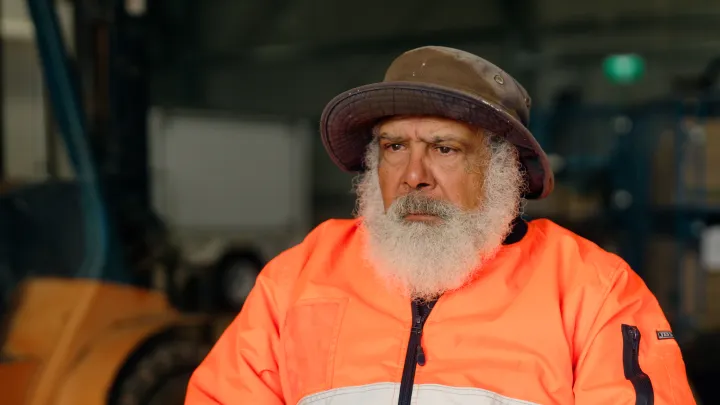
Dallas says RJED has had a positive impact on his life.
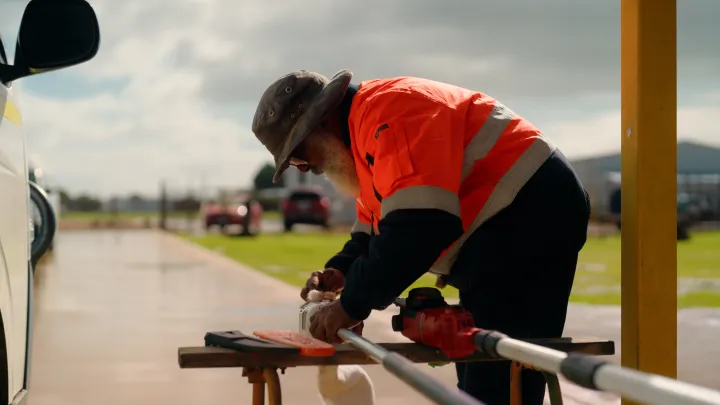
Dallas working in his job, funded through RJED.